

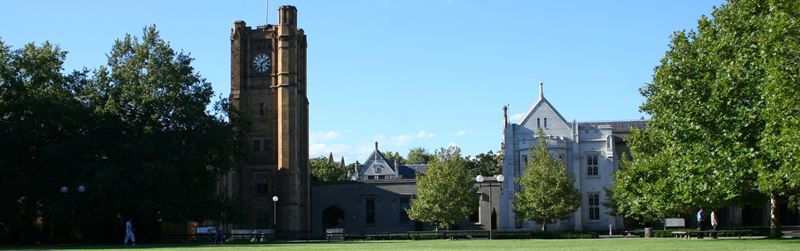









Australia, officially the Commonwealth of Australia, is a country in the Southern Hemisphere comprising the mainland of the Australian continent (the world's smallest), the island of Tasmania and numerous smaller islands in the Indian and Pacific Oceans.
For at least 40,000 years before European settlement in the late 18th century, Australia was inhabited by indigenous Australians, who belonged to one or more of the roughly 250 language groups. On 1 January 1901, the six colonies became a federation and the Commonwealth of Australia was formed. Since Federation, Australia has maintained a stable liberal democratic political system and is a Commonwealth realm. The population is 22 million, with approximately 60% concentrated in and around the mainland state capitals of Sydney, Melbourne, Brisbane, Perth and Adelaide. The nation's capital city is Canberra, in the Australian Capital Territory.
A prosperous developed country, Australia is the world's thirteenth largest economy. Australia ranks highly in many international comparisons of national performance such as human development, quality of life, health care, life expectancy, public education, economic freedom and the protection of civil liberties and political rights.
Melbourne is the capital and most populous city in the state of Victoria, and the second most populous city in Australia. The Melbourne City Centre (also known as the "Central Business District" or "CBD") is the hub of the greater geographical area (or "metropolitan area") and the Census statistical division—of which "Melbourne" is the common name. As of late 2009, the greater geographical area had an approximate population of 4 million.
The metropolis is located on the large natural bay known as Port Phillip, with the city centre positioned at the estuary of the Yarra River (at the northern-most point of the bay). The metropolitan area then extends south from the city centre, along the eastern and western shorelines of Port Phillip, and expands into the hinterland. The city centre is situated in the municipality known as the City of Melbourne, and the metropolitan area consists of a further 30 municipalities.
Today, Melbourne is a centre for the arts, commerce, education, entertainment, sport and tourism. It is the birthplace of cultural institutions such as Australian film (as well as the feature film), Australian television, Australian rules football, the Australian impressionist art movement (known as the Heidelberg School) and Australian dance styles (such as New Vogue and the Melbourne Shuffle). It is also a major centre for contemporary and traditional Australian music. It is often referred to as the "cultural capital of Australia".
Melbourne has been ranked as one of the top three World's Most Livable Cities by the Economist Group's Intelligence Unit (since 2002), top 10 Global University Cities by RMIT's Global University Cities Index (since 2006) and top 20 Global Innovation Cities by the 2thinknow Global Innovation Agency (since 2007). The metropolis is also home to the world's largest tram network. The main airport serving Melbourne is Melbourne Airport.